 Family Portal
  Employees
  Portuguese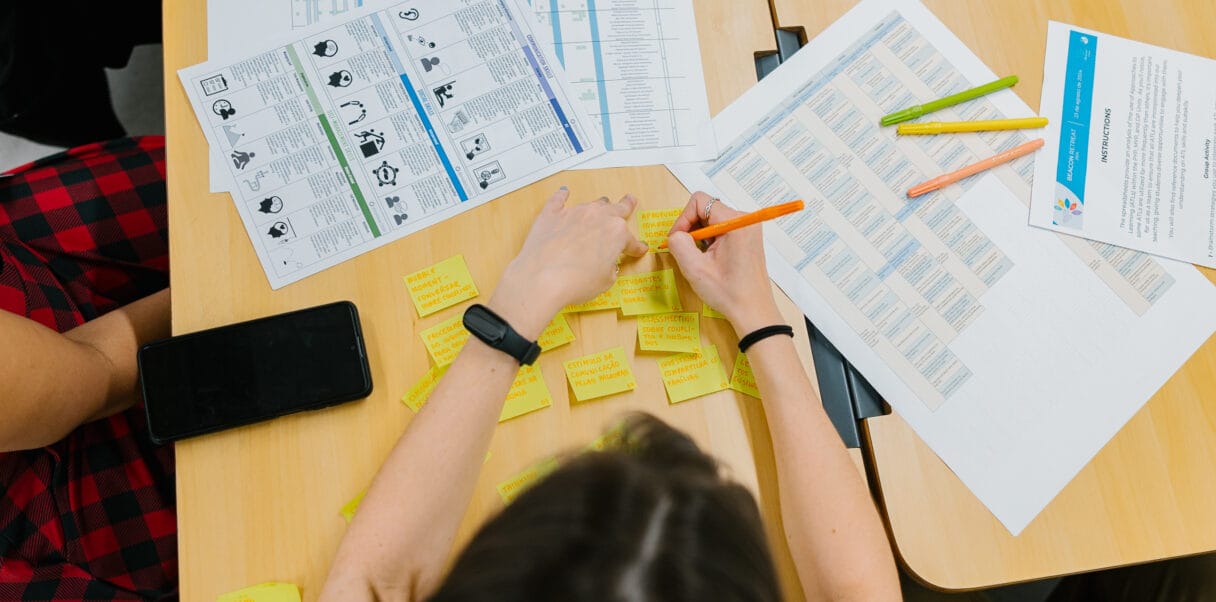
22.04.2026
In an increasingly dynamic and unpredictable world, education needs to go beyond the transmission of content. Today, preparing students for the future means developing not only what they know, but, above all, how they think, how they learn, and how they relate to the world. It is within this context that the Approaches to Learning (ATL) of the International Baccalaureate (IB) play a central role.
ATL skills are a set of competencies organized into five broad areas: communication, social skills, self-management, thinking, and research. They support students in becoming autonomous, critical learners who are able to transfer their knowledge across different contexts. More than just skills, these are essential life competencies.
At Beacon School, these skills are developed intentionally and integrated into the curriculum from the early years through high school. This means that we do not teach content alone, but also how to organize ideas, conduct in-depth inquiry, collaborate effectively, manage challenges, and reflect on the learning process itself.
In practice, this is reflected in concrete classroom experiences. For example, when developing research skills, students are encouraged to formulate questions, seek information from a variety of sources, evaluate the reliability of those sources, and communicate their findings ethically and responsibly. This includes activities such as guided investigations, analysis of multiple sources, and the production of presentations or reports—promoting not only content mastery but also critical thinking and ethical use of information.
In the area of self-management, students learn to plan their tasks, set goals, and manage their time. Strategies such as project planning, use of agendas, and goal-setting support students in becoming more organized, persistent, and responsible for their own learning.
Regarding social skills, we promote structured collaborative work in which students learn to listen, respect different perspectives, negotiate ideas, and resolve conflicts constructively. In group activities, for example, they are encouraged to take on different roles, build collective agreements, and reflect on their participation—strengthening essential socio-emotional competencies.
Thinking skills are developed through learning experiences that encourage analysis, creativity, and reflection. This includes situations in which students are challenged to solve complex problems, propose innovative solutions, connect knowledge across disciplines, and reflect on their own learning processes—developing metacognition, a key skill for lifelong learning.
Finally, communication skills are developed broadly, involving different languages and formats. Students are encouraged to express their ideas clearly, adapt their communication to different audiences, listen actively, and use a variety of media—essential competencies in an increasingly connected and digital world.
The relevance of these skills goes far beyond school. Increasingly, the job market values professionals who can collaborate, communicate effectively, solve problems, adapt to change, and continue learning throughout their lives. Technical skills remain important, but they are no longer sufficient. Organizations seek individuals with the very competencies that ATL skills foster throughout the educational journey.
At Beacon, we believe that education is about preparing students for life. For this reason, we continuously monitor the development of these skills using tools such as learning rubrics, which allow students to reflect on their progress and grow with increasing autonomy.
By integrating ATL skills in a consistent and intentional way, we develop students who are not only capable learners, but also prepared to face challenges, make ethical decisions, and contribute meaningfully to society.
20.08.2026
Exploring Paths for the Future: Job Shadowing and Summer Programs
During the July break, Beacon students took part in a variety of learning and professional e [ ... ]
12.08.2026
SWBC Holds Professional Development and Alignment Meeting
As we begin a new semester, the teams that make up Beacon School’s Student Wellbeing Center [ ... ]
05.08.2026
Beacon School Holds Its Second Alumni Reunion and Celebrates Its Connection with Former Students
Last Saturday, Beacon School held its second Alumni Reunion, a special gathering that brough [ ... ]