 Family Portal
 Employees
 Portuguese

15.04.2026
The Portuguese Language workshop with Fábio Kabral highlighted students’ engagement in a proposal aligned with the IB MYP principles, combining critical reading, creative production, and linguistic reflection. During the session, the author shared insights into his literary project and provided meaningful feedback on character development, strengthening students’ agency and autonomy.
This learning journey began with the reading of Romieta e Julieu: tecnotragédia amorosa, by Ana Elisa Ribeiro, which enabled students to expand their analysis of verbal and non-verbal elements in dialogue with William Shakespeare, particularly regarding contemporary adaptations and the role of technology in language and social interactions.
The reflection was further deepened through engagement with Fábio Kabral’s work, characterized by Afrofuturism, the appreciation of ancestry, and the creation of narratives centered on Black protagonists, broadening students’ repertoire and consolidating meaningful learning.
As a continuation of this process, students began creating their own characters and took part in coded message exchanges through a Victorian Puzzle—an activity that involves solving enigmas by decoding linguistic and contextual clues. The process culminated in the development of a fictional social network, “Instapad,” where students engaged in argumentative exchanges mediated by internet language, while also critically reflecting on the appropriateness and use of standard language across different contexts.
13.10.2026
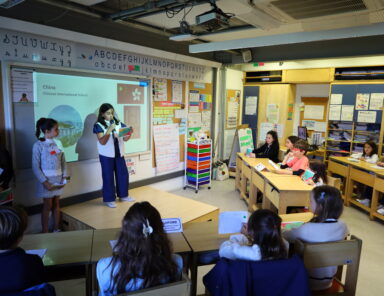
COP Beacon Y3
As part of the Natural Resources Unit of Inquiry, within the transdisciplinary theme Sharing [ ... ]
09.10.2026
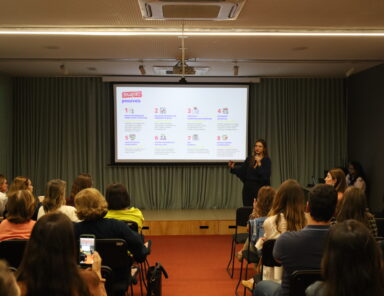
Conference Cycle – Renata Cafardo – How Can We Educate Our Children Before the Algorithms?
On the evening of October 7, Beacon welcomed journalist and writer Renata Cafardo for anothe [ ... ]
08.10.2026
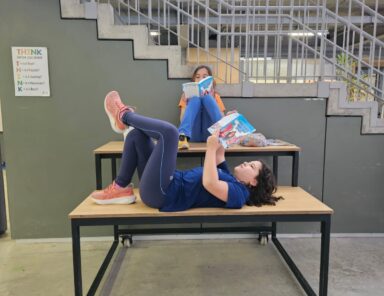
Literary Narratives and Their Contribution to the Socioemotional Development of Young Children
“If I were to teach a child the art of reading, I would not begin with letters and syllables [ ... ]