 Family Portal
 Employees
 Portuguese
09.02.2021
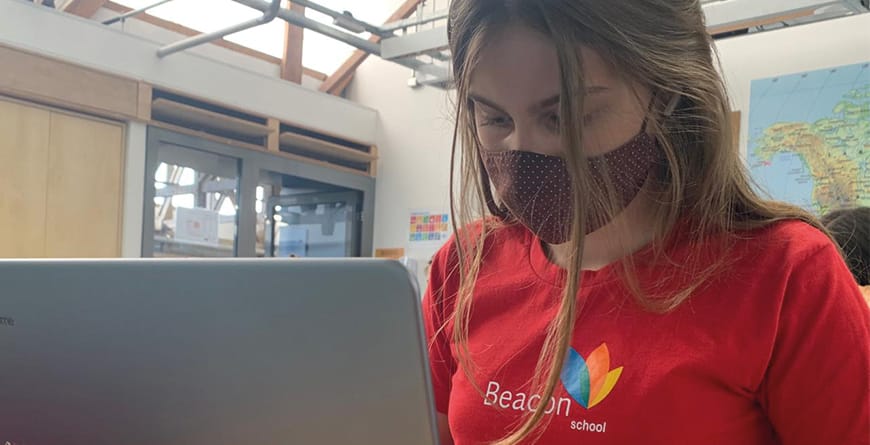
Strange times when we all went to live in one place only: the computer screen. There are classes, games, fun, moments of work and leisure. Trying to simulate the life we had before and expanding what we already did in the digital space.
What for us is a time for exchanging, browsing, watching movies and listening to music, talking with friends or shopping, for companies is the right time to learn more about what we think and desire. And for malicious people and groups, we are the next victim.
A simple “turn it off” would be very easy, but the pleasure of the game, the interaction, the effortless access to information, and the feeling that “they are talking to me” are immense, even more in times of social distancing.
Internet security is nothing new. Neither is the focus on children and young people, although adults and, above all, the elderly are also victims of the web. The time when we thought that controlling children’s time and putting parental control programs on websites and devices was enough to protect them is in the past. Or to suppose that if they are watching YouTubers and “Influencers” who are also children or young people, it is fine. It’s not okay.
Researching the habits of our students, we realized that many have rules about time on the web. However, little is said about the content they have access to and, mainly, about content and data they “deliver” in groups, on websites, or as part of the games they participate in. And they are everywhere: in a guessing game on Instagram, I tell about who I am, what I do, what I consume. When registering for an exciting and free website, much more information than necessary for the game is requested. I make my photos available for a test or proof of love, and I send a picture to the crush. These data feed companies on patterns of behavior is worth a lot and is sold. Pictures and passwords can go much further than a proof of love and become evidence of a crime when posted on the web. And YouTubers, even kids, sell consumption patterns that, taken as models, create complicated ways. You can’t be happy, beautiful, rich, have the best of everything: the body, the trip, the wardrobe, the everyday.
Web security is built with dialogue, sharing, and intimacy. The intimacy of sitting next to the children and watching what they consume, following their profiles, reading the contract together before clicking accept, accept, and accept to start the game. Being able to ask questions like “will it be that in 5 years or ten years you will want people to see you in this photo?” “If you were this girl, would you like what you are doing in this video?” “How do you think she feels?” “How do you feel when you see this?” To suggest content, create to post, and enjoy what this immense sea of information, encounter, and fun provides when we understand how it works and where we can surf the web.
*Article written by Zilda Kessel, Coordinator of Educational Technology (EdTech) at Beacon.
13.10.2026
COP Beacon Y3
As part of the Natural Resources Unit of Inquiry, within the transdisciplinary theme Sharing [ ... ]
09.10.2026
Conference Cycle – Renata Cafardo – How Can We Educate Our Children Before the Algorithms?
On the evening of October 7, Beacon welcomed journalist and writer Renata Cafardo for anothe [ ... ]
08.10.2026
Literary Narratives and Their Contribution to the Socioemotional Development of Young Children
“If I were to teach a child the art of reading, I would not begin with letters and syllables [ ... ]