 Family Portal
 Employees
 Portuguese
05.11.2026
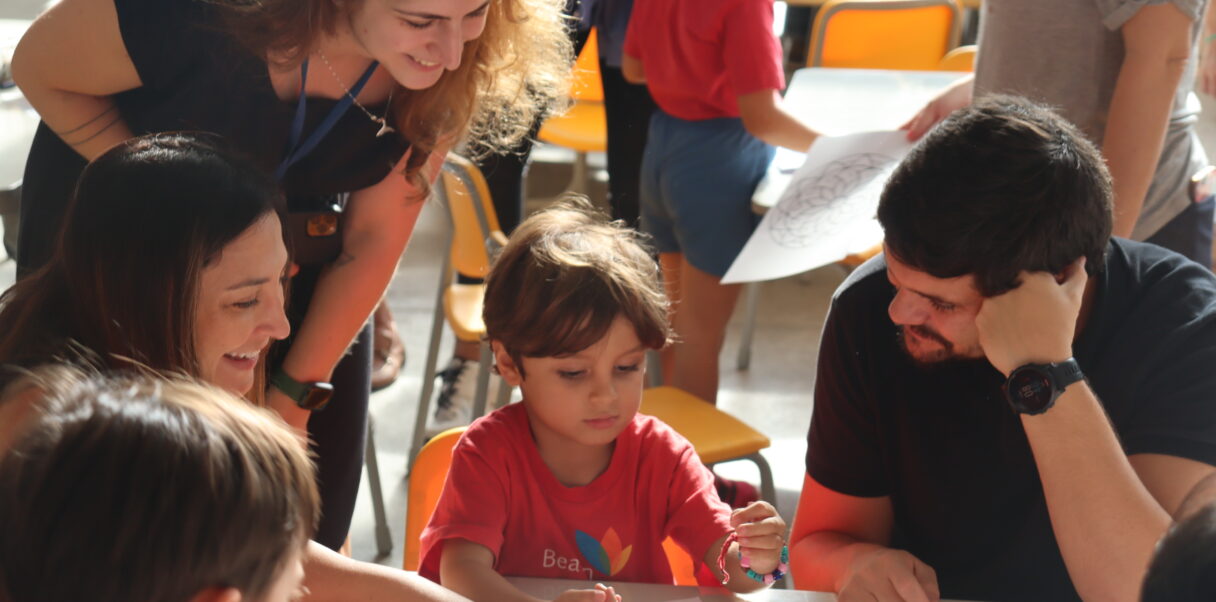
Co-Education and Collective Responsibility in Holistic Development
A child experiences development as a continuous journey. They do not leave their emotions at home when they arrive at school, nor do they forget in the classroom what they learned when they return home. This is why alignment between school and family values is so important. The choice of a child’s formal education should reflect what the family values and envisions for their future as global citizens. Educating children, therefore, is not a task divided between institutions, but a shared responsibility among all the adults who are part of their lives.
This is what we call co-education. Home and school are different environments, each with their own rules, but the principles that guide relationships should be shared. It is about building an educational partnership grounded in common values: respect for the child, clear and consistent boundaries, active listening, responsibility for one’s own actions, the development of autonomy, the appreciation of dialogue, and the understanding that making mistakes is part of learning.
Along this journey, consistency is essential. Being consistent means providing children with emotional and ethical predictability: they know what to expect from adults, they know they will be heard, and they know that values do not change depending on the mood of the day. This sense of security allows them to take risks, make mistakes, and grow. A boundary is not a wall that confines a child, but a framework that protects and guides them, like the banks of a river that do not prevent the water from flowing, but simply give it direction. By providing clear guidance, boundaries show children where safe and respectful paths lie. Within this firm yet welcoming framework, they gain the freedom to explore, make choices, and learn to take responsibility for their actions.
Children learn far more by observing relationships than by listening to speeches. When they are surrounded by adults who resolve conflicts respectfully, set boundaries without violence, and encourage making amends rather than punishment, they develop their own internal references for how to relate to others. Leading by example teaches more than any lecture.
This is where Positive Discipline comes into play. It is often misunderstood as permissiveness, when in fact it is quite the opposite. It is an approach that combines firmness and kindness: boundaries remain in place and are communicated respectfully, without shouting, threats, or humiliation. Adult authority is not abandoned; instead, it is exercised with calmness and clarity.
Within this perspective, making amends plays a central role. It means taking responsibility for what happened and actively seeking to restore what has been affected. This involves understanding the mistake in its entirety and recognizing how it impacted the environment and others, so that, with adult guidance, the child can find the best way to make things right. While punishment often leads to fear, defiance, secrecy, or resentment, making amends encourages children to understand the impact of their actions and become active participants in finding a solution.
When school and family move in the same direction, children experience consistency in the world around them. And it is from this consistency, built on dialogue, boundaries, and trust, that the holistic development we hope for every child can emerge.
By Maria Laura Sanchez and Tania Terpins

05.11.2026
Beacon’s Head of School Leads International Debate on AI in Education
We are proud to share that Dr. Elizabeth Sutherland, Beacon’s Head of School, was a featured [ ... ]
05.11.2026
How Schools and Families Work Together to Support Children’s Holistic Development.
Co-Education and Collective Responsibility in Holistic Development A child experiences devel [ ... ]

05.11.2026
What the Hallways Don’t Show and Brazil’s Ground Revealed
When I think about the teenager I once was, I remember a girl who studied to get “somewhere. [ ... ]