 Family Portal
 Employees
 Portuguese
11.11.2026
By: Paola de Albuquerque Costa – G4 Coordinator
A prepared environment is never neutral. Long before an adult speaks, the room itself extends an unspoken invitation—a gentle call that draws children into exploration and self-directed inquiry. It sparks innate curiosity, allowing the developing mind to dive deeply into authentic discovery.
By synthesizing Maria Montessori’s prepared environment, Reggio Emilia’s reverence for the environment as the “third teacher,” and the International Baccalaureate Primary Years Programme’s (PYP) focus on transdisciplinary inquiry, physical space transforms from a mere container for learning into a dynamic driver of child-led exploration.
Stepping into a thoughtfully prepared environment brings a quiet sense of anticipation. Sunlight streams across natural wood tones, and living plants bring the outdoors in. Open shelves present carefully curated materials at the child’s exact eye level. When a space is aesthetically harmonious,it sends a profound message: You are capable, trusted, and worthy of rich, inspiring surroundings.
At the core of this space lies the Montessori principle of order, independence, concentration, and respect. It is a carefully prepared environment in which every element has a purpose and contributes to the child’s development. It is a space that nurtures independence, concentration, coordination, and a sense of order, while fostering respect for oneself, others, and the environment. When every object has a designated home, the child gains immediate agency. Low, accessible shelves empower them to select their work, immerse themselves deeply, and care for their space without needing adult permission. This external order nurtures an internal sense of predictability and calm—a psychological sanctuary where concentration can naturally flourish.
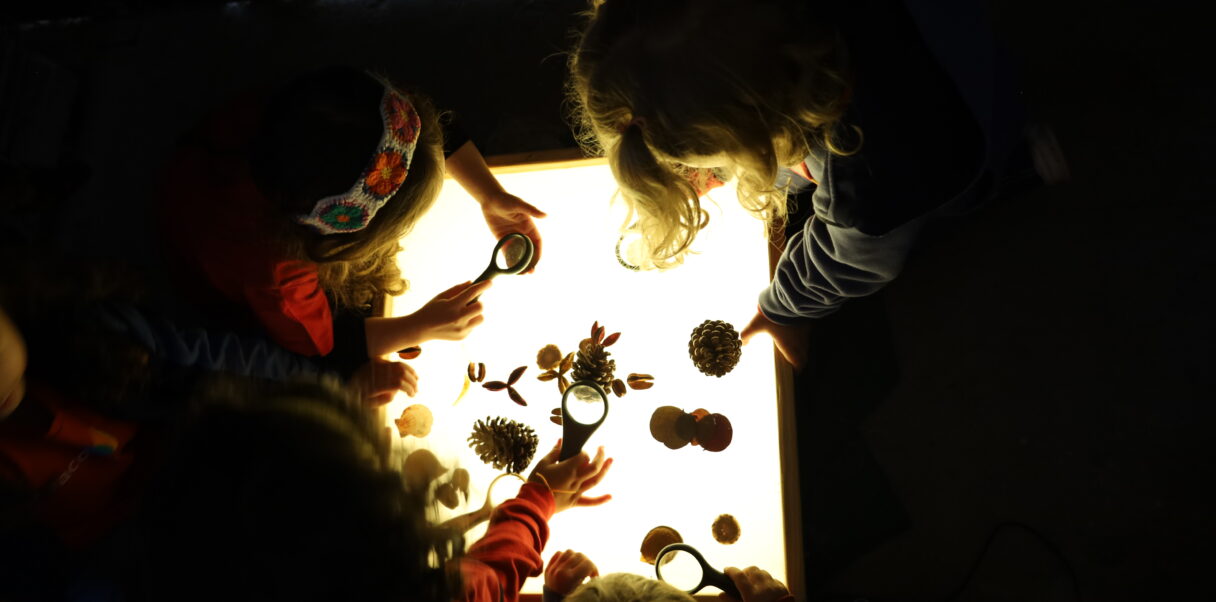
Simultaneously, through the lens of Reggio Emilia, elements like light tables, mirrors, and transparent shapes transform everyday geometry and color into multi-angled studies of light and shadow. The environment quietly guides the child, allowing them to experience balance, gravity, and sequence firsthand rather than through abstract instruction.
Within the PYP framework, this intentional layout acts as an engine for inquiry. A magnifying glass resting beside a pinecone, a streak of sunlight across a textured tile, or loose stones arranged near a mirror serve as provocations—open-ended invitations to wonder, hypothesize, and research.
Rather than prescribing rigid answers, the space poses quiet questions. The child becomes an active researcher, moving fluidly between solitary reflection and collaborative inquiry. As they test ideas and explore natural materials, they naturally embody the attributes of the PYP Learner Profile—growing into inquisitive, reflective thinkers and compassionate stewards of their shared world.
By stepping back and allowing a beautifully crafted space to teach, we honor the child’s innate natural thirst for knowledge to develop. A room filled with light, purpose, and natural harmony does far more than capture a child’s attention—it awakens a lifelong reverence for learning, turning everyday moments into extraordinary discoveries.
11.11.2026
Designed to Discover
By: Paola de Albuquerque Costa – G4 Coordinator A prepared environment is never neutra [ ... ]
05.11.2026
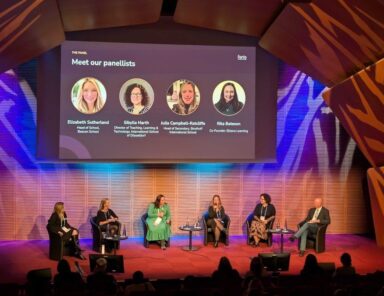
Beacon’s Head of School Leads International Debate on AI in Education
We are proud to share that Dr. Elizabeth Sutherland, Beacon’s Head of School, was a featured [ ... ]
05.11.2026
How Schools and Families Work Together to Support Children’s Holistic Development.
Co-Education and Collective Responsibility in Holistic Development A child experiences devel [ ... ]